How Doom turned players into level designers in 1993
The WAD format and a hacker community wrote the rulebook for PC modding
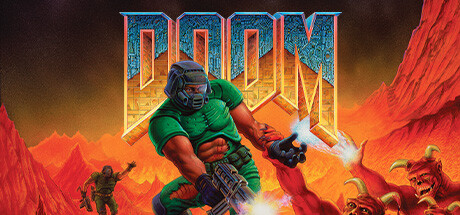
Within weeks of Doom's release in December 1993, people were pulling the game apart to figure out how its levels were stored. Brendon Wyber built an early editor and called it DEU, the Doom Editing Utilities; Raphaël Quinet picked it up and carried the work forward, and by late January 1994 a public version was out. Suddenly anyone with a DOS machine could build a room, drop in some monsters, and play their own corridor. id Software had not shipped an editor. The community wrote one anyway, because the door had been deliberately left unlocked.
A format that invited tampering
The thing that made this possible was the WAD file. Doom kept its maps, textures, sounds, and sprites in a single archive id called a WAD, a name designer Tom Hall is credited with coining, said to stand for "Where's All the Data." Crucially, the engine code and the game data were separate. You could swap in a custom WAD without touching the executable, and the engine would happily load your levels instead of the shipped ones.
That separation was a design decision, not an accident. John Carmack, id's lead programmer, came out of hacker culture and was sympathetic to it, and the studio had already seen players poking at the data files of its earlier shooter, Wolfenstein 3D. With Doom they leaned in. The shareware model meant the first episode spread everywhere through bulletin board systems, and every copy carried the same moddable format. A teenager downloading Doom over a modem in 1994 had, in effect, the same raw material a level designer at id worked with.
From custom maps to total conversions
The first wave was simple custom levels traded on BBSes and early FTP sites. It escalated fast. Tools matured, with later editors like DCK and WadAuthor joining DEU, and people started replacing not just the geometry but the textures, the monster sprites, the sounds, and the music. The result was the total conversion, a mod that turns Doom into a different game entirely.
The early standout is Aliens TC by Justin Fisher, released in November 1994 and widely cited as the first total conversion. It reskinned Doom into the world of the Aliens films, with motion-tracker bleeps, dark corridors, and xenomorphs in place of imps. Playing it felt nothing like vanilla Doom. That was the revelation: the engine was a stage, and the WAD was the entire play. Companies noticed too. id later released the Master Levels for Doom II, built by commissioned independent mappers, and published the commercial Final Doom in 1996. One half of it, The Plutonia Experiment, came from brothers Dario and Milo Casali, whose maps are still talked about for their cruelty.
Why it never died: the source-port scene
Doom should have aged out the way most DOS games did. It did not, and a big reason is December 1997, when id released the original Doom engine source code to the public. The first release came under a restrictive non-commercial license; id later granted permission to re-release it under the GNU GPL in 1999. Either way, programmers immediately began porting the engine to run natively on modern operating systems and fixing limits the 1993 hardware had forced on the original.
These rebuilt engines are called source ports. Boom, from the group TeamTNT, lifted old restrictions and added editing features that mappers had been begging for. Later ports went much further: ZDoom and its OpenGL-based descendant GZDoom added scripting, hardware-accelerated rendering, and sloped surfaces; Chocolate Doom went the other direction, recreating the original DOS behavior down to its bugs for purists and preservationists. Each port became a new platform, and mappers now build for specific ports the way developers target consoles.
The upshot is that a level format from 1993 is still an active medium. People release new megawads, full multi-level campaigns, every year. There are even annual awards, the Cacowards run by the Doomworld community, which tells you the flow of fresh maps is steady enough to need judging.
The blueprint everyone copied
Look at what came later and the pattern is obvious. Quake's mod scene gave us Team Fortress, which began as a fan project before its makers were hired by Valve; Counter-Strike grew out of Half-Life the same way. The Bethesda games run on construction kits the studio hands out on purpose. All of it descends from a simple choice id made in 1993: keep the data where players can reach it, and trust them to do something interesting with it.
More than thirty years on, someone is opening a WAD editor right now to place a single monster in a room, the same act those first editors made possible. The format outlived the hardware, the company's ownership changes, and several generations of graphics. That is the strange permanence of giving people the keys.