How a Half-Life mod called Counter-Strike took over the world
From a 1999 fan project to a global esport, with the community holding the level files the whole way
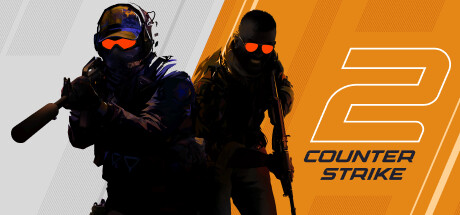
In April 2000, Valve did something studios almost never did back then: it bought a free fan-made mod and put its two creators on the payroll. The mod was Counter-Strike, a Half-Life modification that pitted a team of terrorists against a team of counter-terrorists. By that November it shipped as a standalone retail product. The two people Valve hired were Minh Le, who went by the handle "Gooseman" and had written the gameplay code, and Jess Cliffe, who ran the website and the community and contributed to the maps. They had shipped Beta 1.0 on June 19, 1999, on Valve's GoldSrc engine, the same one powering Half-Life, because Half-Life shipped with the tools to build on it. That single decision, letting players make their own content, is the entire reason any of this happened.
A mod that ate its host
Half-Life was a single-player game about a physicist with a crowbar. Counter-Strike took its engine and built something Valve hadn't: a round-based, buy-menu, one-life-per-round multiplayer shooter where economy and positioning mattered as much as aim. You died, you waited, you watched. That tension was the hook.
What's easy to forget now is how unusual the path was. Counter-Strike wasn't designed in a meeting. It was iterated in public, build after build, with players arguing on forums about whether the AWP was too strong or whether bunny-hopping should be patched out. A fan project became a Valve title without ever losing the feedback loop that made it.
The maps came from the same place. de_dust, built by a designer named Dave Johnston, defined what a Counter-Strike map looked like: clear sightlines, a bomb site at each end, chokepoints you learned by dying in them. Its successor de_dust2 became so central that two decades and several engine generations later, players still load into a recognizable version of the same layout. A piece of amateur level design from around 2001 is now permanent furniture in a competitive scene worth a great deal of money.
The Workshop kept the door open
When Counter-Strike: Global Offensive launched in 2012, Valve folded in the Steam Workshop. That mattered more than it might sound. The Workshop let mapmakers upload, players subscribe, and Valve pull community creations into official rotation without anyone emailing a zip file around. de_cache, made by the mapper known as FMPONE, started life as a custom map and became the first community-made map promoted into the official competitive pool. Other maps cycled through community refinement before official adoption.
This is the throughline. Counter-Strike has changed engines, names, and business models, GoldSrc to Source to Source 2, retail box to free-to-play, CS 1.6 to CS:GO to Counter-Strike 2 in 2023. The constant is that the people playing it have always also been the people building it. The Workshop just formalized a relationship that existed from Beta 1.0.
From LAN basements to arena stages
The competitive scene grew out of the same soil. Early tournaments ran on 1.6 in internet cafes and LAN halls, with a particularly deep scene in Sweden and across Europe. Teams like Ninjas in Pyjamas, who went on to dominate the early CS:GO Majors, built careers on muscle memory wired into community-made maps. The Majors, the marquee tournaments Valve began backing in 2013, started with a prize pool of $250,000 and grew into events handing out over a million dollars. The crowds fill arenas.
None of that prestige erased the amateur roots. A Major map pool is still mostly maps that passed through community hands. Watch a top-tier match and you are watching professionals execute strategies on geometry that a hobbyist sketched out and a community stress-tested over years.
Why the mod origin still matters
Counter-Strike is the clearest argument for shipping a game with its own construction kit. Valve didn't plan an esport. It built a flexible engine, opened it, and got handed a phenomenon by people who weren't on payroll. The same pattern echoes through Team Fortress and Dota, both of which also began as mods before Valve brought them in-house.
The interesting question now is whether that loop can run again. Counter-Strike 2 carries forward Workshop support, so the tools are still in players' hands. Somewhere there is a teenager opening a level editor for the first time, the way Dave Johnston did, the way Minh Le did. What they build might not stay theirs for long. That's been the deal since 1999, and it has worked out fine.